Jens Theunckens
For companies offering fixed-term leasing contracts, understanding whether customers will renew and when is critical. As contract end dates approach, uncertainty often remains about customer intentions. This makes it difficult to plan sales activities, allocate resources efficiently, and retain customers.
Without clear insight into renewal behavior, organizations face several challenges:
Missed renewal opportunities
Inefficient sales planning and misdirected dealer efforts
Higher customer churn
Unpredictable renewal revenue
As one finance manager put it:
“How can we predict which leasing customers will renew and when so dealers can contact the right customer at the right time?”
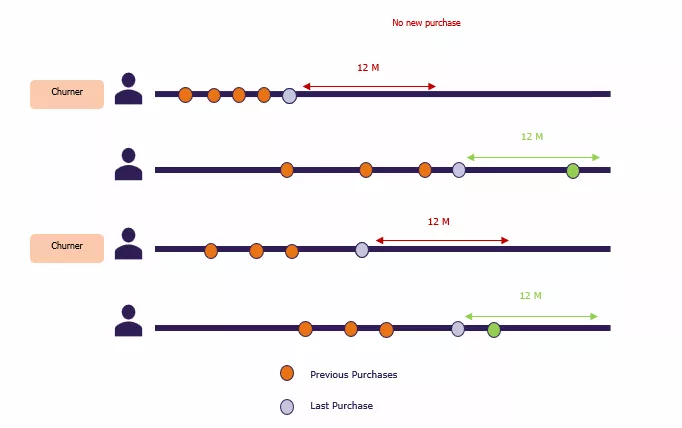
Contract renewal analytics address this challenge by using historical contract, customer, and behavior data to build a predictive model that estimates:
The likelihood that a customer will renew their contract
The expected timing of that renewal
This shifts the renewal process from reactive follow-ups to a proactive, structured approach.
The model outputs are directly usable by sales and service teams:
Dealers can prioritize customers with the highest renewal likelihood
Customers are contacted at the optimal moment, based on predicted timing
Sales resources are allocated more efficiently across the customer base
This data-driven approach delivers clear benefits:
Proactive customer engagement instead of last-minute outreach
More efficient use of sales and service capacity
Reduced customer churn
Better visibility into renewal behavior and customer lifecycle patterns
By transforming contract renewals into a strategic, insight-driven process, organizations improve both operational efficiency and long-term customer retention, while making renewal revenue more predictable.
Geo dashboarding supports B2B marketing and sales teams in identifying and prioritizing prospecting opportunities across different geographic regions. Instead of working with fragmented data or intuition, teams gain a clear visual overview of where potential customers are located and where sales efforts will have the most impact.
At NMBS, the B2B team is responsible for closing contracts with companies to provide train subscriptions for employees’ daily work commutes. However, several challenges limited their effectiveness:
Low data maturity: limited insight into current performance and market potential
Lack of internal alignment: no shared view on priorities or regional focus
Inefficient prospecting: no clear guidance on which companies to target
Without data insights or visual overviews, the B2B growth strategy felt like prospecting in the dark.
Geo dashboarding addresses these challenges by combining multiple data sources into one actionable view:
Internal sales and customer data
External data sources such as RSZ/ONSS
Geographic data on office and employee locations
An algorithm enriches and matches these datasets to identify potential B2B prospects and align them with ongoing sales efforts.
Using this approach:
Over 4 million employees were mapped to their office locations
The share of employees with a feasible train commute was calculated, based on whether train travel time is equal to or faster than driving
Current versus potential train commute adoption was calculated per company and per region
These insights are then visualized in an interactive geographic dashboard, showing:
Where NMBS already has strong penetration
Where untapped potential exists
Which regions and companies should be prioritized by sales team
By visualizing prospecting opportunities geographically, B2B teams can focus their outreach on companies with the highest potential, align sales and marketing around the same insights, and move from reactive to targeted, data-driven prospecting.